What’s Really Working on Instagram in (Insert Year Here)
First off… No. The whole (insert year here) in the blog title is not a mistake.
We all know Instagram has been a major revenue driver for nearly a decade. Over the years, the platform and the advice on how to use it have changed a lot. Every few months, there’s a new “best strategy” to grow faster, hack the algorithm, or go viral. Some of those methods have real merit. I’ve tested plenty myself, both with clients and back when I ran my own business as a personal trainer and health coach.
Most of them work for some people and not for others. At the end of the day, it’s trial and error on the details. But the foundation? That part rarely changes. When you’re marketing to humans, human nature doesn’t swing with the trends.
You can make it complicated, and big brands do, because they have the people and the budgets for it. Most of my clients don’t. They’re small to mid-sized businesses, often with no full marketing team at all. For them, we start simple and strategic: build the foundation first, then get into targeting and fine-tuning once the core is solid.
So let’s skip the hacks and talk about what really works: the numbers, the patterns, and the strategy that holds up no matter what year it is.
First, a breath: you’re Probably Doing Better Than You Think…
If you’re showing up consistently, creating content, and connecting with your audience, you’re already ahead of most businesses. Regular posting, engaging with comments, and keeping your offers visible takes real effort — and it pays off more than you think.
Across industries, most brands see average results that look modest on paper: engagement rates under 3%, ad conversions around 1–2%, and steady, slow follower growth. Those are healthy numbers. They’re not a sign you’re failing — they’re the benchmarks that real businesses operate within. (Source: Sprout Social, DriftLead)
Instagram still drives revenue. Nearly one-third of users make purchases on the platform, and over 60% say they use it to discover products and services. That means the work you put into showing up — even when it doesn’t feel explosive — builds familiarity and trust over time. (Source: Sprout Social)
The point isn’t to post nonstop or to hit viral numbers. It’s to stay consistent, connect with the right people, and make sure your content has a purpose other than “just to get something out there”.
The data tells a story, but strategy gives it meaning
Sprout Social’s 2025 report shows that 50% of users interact with brands on Instagram every day. That doesn’t mean half the world is buying something; it means they’re open to connection. What turns that connection into revenue isn’t posting more often — it’s having a system for what happens when someone actually engages.
That’s where strategy comes in.
You can have beautiful posts and clever captions, but if there’s no through-line between your content, your offers, and your customer journey, you’ll always feel like you’re guessing.
When I work with clients, we build the why and the how before the what.
We define the goal, the message, and the action we want each post, ad, or story to create. That foundation makes every piece of content more intentional — and a lot easier to measure. Quick reality benchmarks for 2025
Purchases on Instagram: 29 percent of users report buying on the platform. Good news for both DTC and service offers with clean funnels. Source: Sprout Social
Ad conversion ranges: 1 to 2 percent across objectives is common. 3 percent is strong. Consumer categories often land higher than B2B. Calibrate projections and budgets with this in mind. Source: DriftLead
Format priority: Reels lead engagement, so build a repeatable vertical video workflow instead of treating video as a once-in-a-while project. Source: Sprout Social
What the best-performing brands have in common
Whether they’re large or small, the businesses that actually convert on Instagram share the same traits:
Clear goals. They know exactly what each campaign is meant to achieve: awareness, leads, or direct sales, and measure against that.
Consistent creative. Reels and short-form video perform best, but not because of a magic formula. They work because they keep attention, tell a clear story, and fit the brand’s visual language.
Optimized pathways. The ad and the landing page look and feel like part of the same experience. Forms are short, messaging is aligned, and there’s no friction in the process once someone clicks.
Realistic expectations. They don’t chase vanity metrics. They use data to set targets that make sense for their stage of growth and the goals they set for the campaign.
These are simple shifts, but they separate the brands that feel “stuck” from the ones that build steady, repeatable growth.
How to apply this to your own business
If you want to use Instagram in your marketing strategy without getting lost in the sauce (wow, that was peak millennial), here’s where to start.
Instagram works best when it’s part of a bigger plan — one that goes beyond how often you post or what you post. I’m not saying that good creative and a solid content strategy don’t matter. I’m saying you need more if you actually want Instagram to convert. The goal isn’t to post endlessly or chase trends; it’s to use the platform intentionally so it supports your business goals instead of draining your time.
Here’s how to keep it strategic and grounded:
Pick one goal for this quarter. Sales for a specific product, email subscriber growth, booked discovery calls — whatever conversion actually moves the needle for your business right now. When you know the goal, your content has purpose.
Build a clear path to that goal. Map out how someone goes from content to conversion: Post → Profile → Link → Sales Page → Action. Keep the journey simple and direct. The more clicks or decisions you add, the more drop-off you’ll see.
Create with purpose. Every post should connect to your main goal and a specific step in your customer journey. If it doesn’t, it’s just noise.
Check your numbers monthly. Weekly works too, but monthly gives a clearer view of patterns. Track reach, profile visits, link clicks, and conversions — and look at percentages, not just raw numbers. Context matters.
Stay flexible. Features will change every few months, but good marketing doesn’t. Know who you’re talking to (beyond basic demographics), communicate clearly, and make the next step obvious…like, super obvious AF.
When you focus on these fundamentals, Instagram stops feeling like a guessing game and starts becoming what it should be: one part of a smart, sustainable marketing strategy that actually grows your business.
Want to Skip The DIY phase & get support building your strategy?
I got you. Click here to inquire about working with me and let Rachel Do Your Marketing.
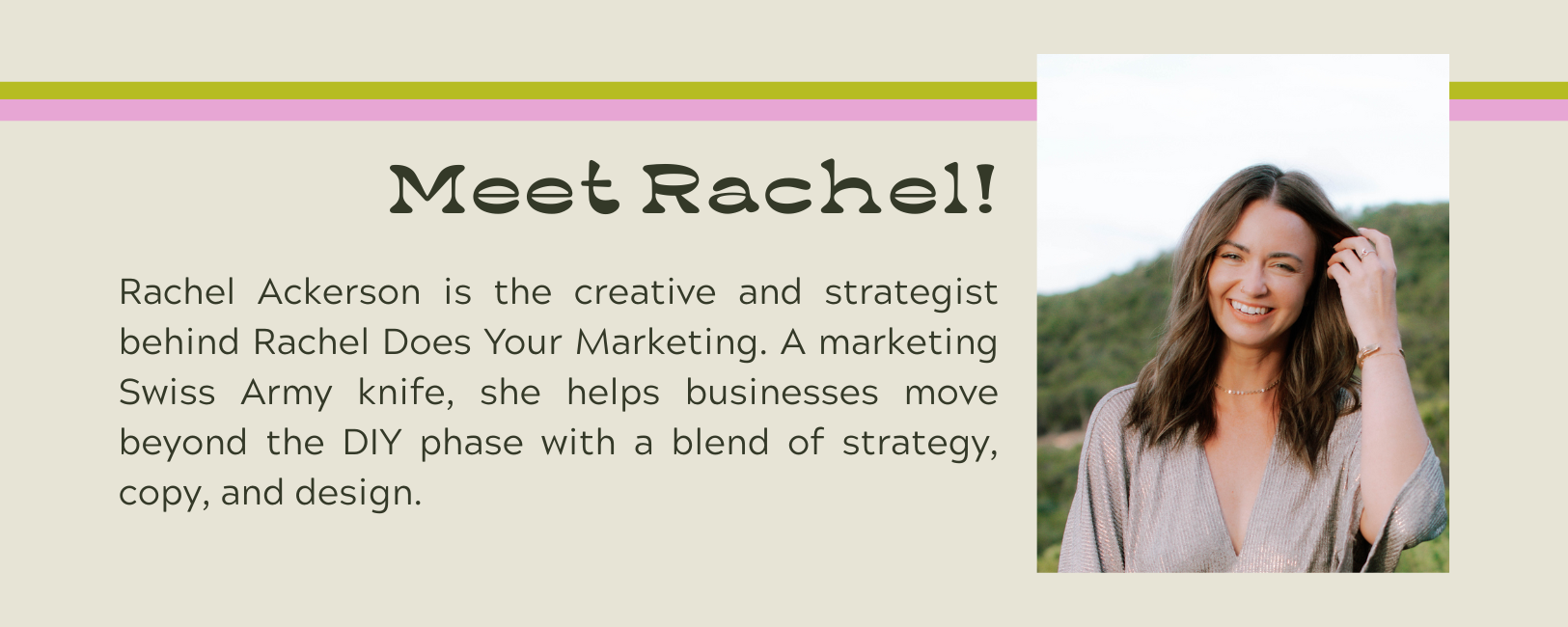
Meet The Author! Rachel Ackerson is the creative and strategist behind Rachel Does Your Marketing.